Does your child sleep restlessly and wake up with a stuffy nose or cough during the winter months? Then it is very possible that the cause is something that many parents do not think about: the humidity in the home.
During the winter, humidity drops in virtually all homes. The cold outdoor air contains very little moisture to begin with, and when it is heated by radiators or other heat sources in the home, the indoor air becomes even drier. This means that humidity can drop to 15–25%, which is well below the recommended 45–55% that is best for the body. This is particularly noticeable in our children, as they have more sensitive mucous membranes and thinner skin.

Dry air affects and dries out our mucous membranes, and children breathe faster than adults and take in more air in relation to their body weight. This means that children’s mucous membranes are affected and dry out more quickly. Many children therefore wake up at night with a cough and a blocked nose. It is easy to interpret this as recurring colds, but in fact it is often dry air that is the cause.
If the air in the bedroom is more humid, children breathe more calmly, they do not wake up due to coughing or a blocked nose, and their mucous membranes have time to recover. The effect is even more pronounced in children with asthma or allergies, as their airways are already reactive and easily irritated.
A dry indoor climate also means that dust, allergens and particles remain in the air for longer. This can intensify allergy symptoms and create an environment where the body has to work harder for every breath.

If you recognise any of the following, the humidity is probably too low:
If you are unsure, a hygrometer will show you in black and white how dry it actually is, and is therefore a good place to start before making any changes. Buy Wood’s hygrometer here.
It is not only the mucous membranes that are affected by dry air, it also affects the skin. During the winter, many children get dry cheeks, chapped lips and dry, irritated skin. This is because the dry indoor air simply draws moisture from the skin, making it difficult to maintain its natural moisture. Children are also more affected by this because they have thinner skin than adults, which makes them extra sensitive when the humidity in the home drops.
For children who always have dry skin, eczema or itching, the problems can worsen significantly during the colder months. When the air is dry, the skin’s natural moisture evaporates more quickly, causing eczema to flare up easily, the skin to become redder, itch more and have more difficulty recovering.
By stabilising the humidity in your child’s room, the skin can retain more of its natural moisture, resulting in less irritation, calmer eczema and significantly softer cheeks – even during the driest part of winter.
When the humidity stabilises at around 45–55%, a lot happens in a short space of time. Breathing becomes calmer, mucous membranes recover, coughing and congestion are reduced, and the skin retains more of its natural moisture. Many parents notice the difference after just a few nights.
Evaporative humidifiers are a particularly good choice for children’s rooms because they work in a natural and hygienic way. Wood’s Geneva HSW90 is a powerful and quiet humidifier that adds moisture with antibacterial filters that keep the air clean and stable throughout the night.
Dry air is a common and often underestimated cause of sleep problems, dry skin, irritated airways and worsened asthma and allergy symptoms. Children in particular react quickly when the air is too dry, as their skin and mucous membranes are more sensitive and their airways work harder.
When the humidity is kept at around 45-55 per cent, an environment is created that allows both the body and the airways to rest. This results in fewer awakenings, calmer breathing, softer skin and a more comfortable everyday life for the whole family.
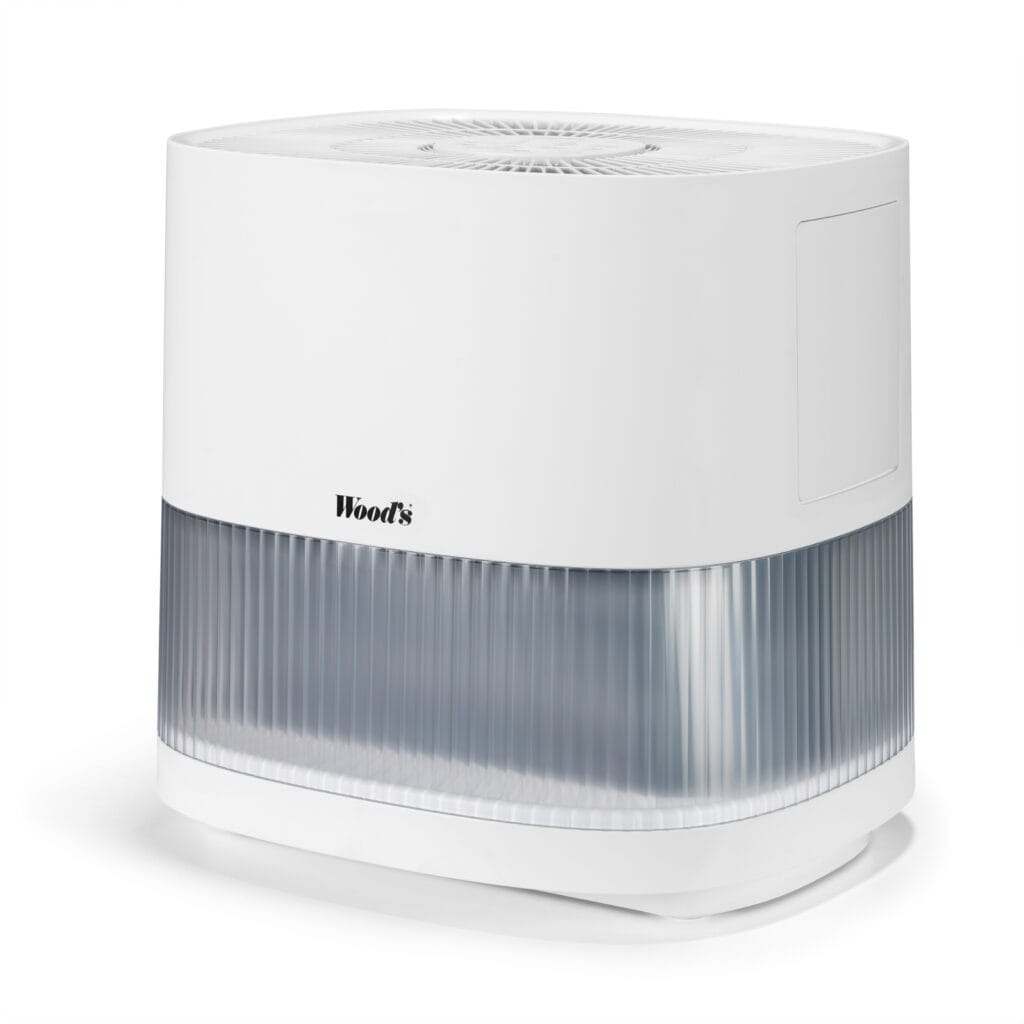
Humidifier for bedrooms, living rooms, children's rooms and offices
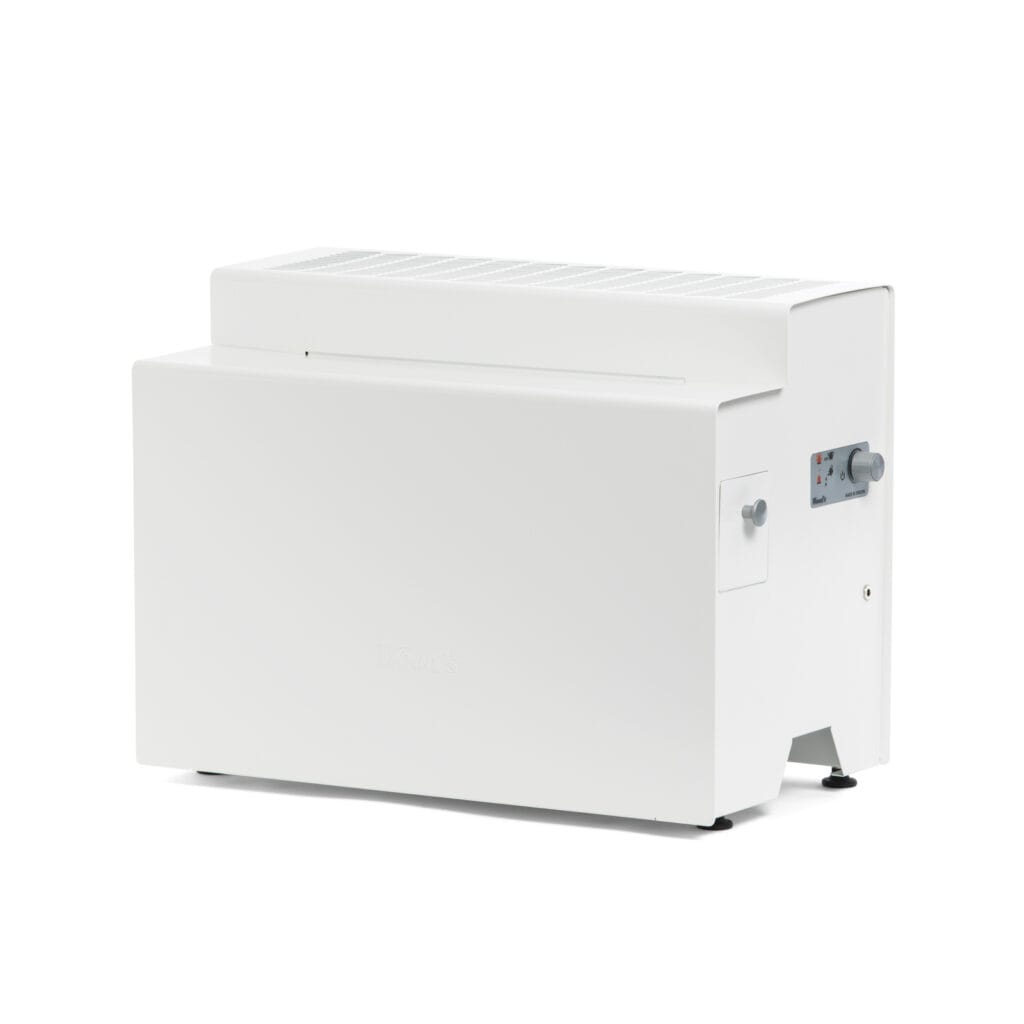
Humidifier for large premises and open-plan spaces

Hygrometer for measuring humidity and temperature
Many children cough at night because of dry air in the bedroom. When the child is lying down and the air is dry, the mucous membranes dry out more quickly, which can lead to coughing and a blocked nose – even though the child is not ill.
In winter, humidity drops significantly when we heat our homes. Dry air dries out children’s mucous membranes, which can lead to irritation in the airways and trigger coughing – even without infection. Children’s airways are more sensitive than adults’, which means they react more quickly to dry environments.
When humidity drops below approximately 40%, many children begin to experience dry mucous membranes, irritated skin and poorer sleep. The recommended level is 45–55%.
Yes. Dry air dries out the mucous membranes in the nose and throat, which can trigger night-time coughing and congestion – even without infection.
Dry air causes moisture to evaporate more quickly from the skin. Because children have thinner skin than adults, they are extra sensitive, which often leads to dry cheeks, chapped lips, itchiness and, in some cases, worsened eczema.
In winter, both outdoor and indoor air is drier. This weakens the skin’s natural moisture barrier, which can cause eczema to flare up, increase itching and make it harder for the skin to heal.
Yes. Adding moisture to the air reduces evaporation from the skin, which can soothe dry skin, itchiness and eczema.
Place the humidifier a short distance from the bed, preferably in the middle of the room, so that the moisture is distributed evenly without blowing directly on the child.
A hygrometer shows immediately if the humidity is too low. Many people are surprised at how dry the air is during the winter months. You can read more about this in the article 5 signs that you have dry air at home.