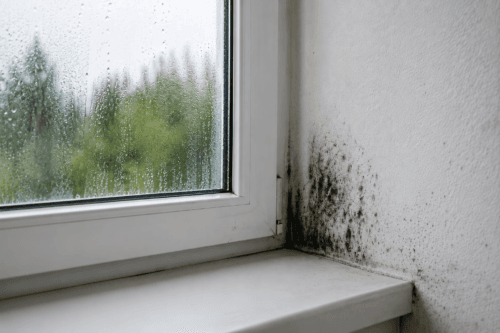
A musty smell, condensation on the windows, washing that takes a long time to dry, mould and a heavy or stuffy atmosphere are some of the most common signs that the humidity is too high. The sooner you spot the problems, the easier they are to fix and the lower the risk of mould and costly damp damage.
Has your basement started to smell musty? Is there condensation on the windows, or does the air in your home feel unusually heavy? If so, it may be because the humidity is higher than it should be.
Many people only realise they have damp problems once mould or other damage has already occurred. But in most cases, there are clear warning signs long before that. By recognising them in good time, you can protect your home and create a better indoor climate.
The recommended relative humidity indoors is usually between 40 and 60 per cent. Relative Humidity Assessment
A hygrometer makes it easy to measure humidity and determine whether it is at a healthy level.
A musty or stale smell is often the first sign that the humidity is too high. The typical ‘basement smell’ is almost always caused by damp that has been present for a long time. When organic materials such as wood, cardboard or textiles are exposed to high humidity, microbial growth can begin to develop. This is often what causes the characteristic odour.
Many people believe that all basements smell like this. That is not true. A dry and well-maintained basement should not have any distinct musty odour.
If condensation regularly forms on the inside of the windows, it is often a sign that the air contains more moisture than it can hold. Condensation occurs when warm, humid indoor air comes into contact with a cold window. If the problem recurs over extended periods, the humidity levels should be checked before the moisture leads to mould or other damage.

When you dry laundry indoors, large amounts of water are released into the air. If the air is already humid, it becomes more difficult for the water to evaporate from the clothes, meaning the laundry takes considerably longer to dry. Slow drying times are therefore often a clear sign that the humidity is high.
Dark patches on walls, ceilings, joints or around windows are a clear warning sign. Mould thrives in damp environments and starts to grow when the humidity is high over a prolonged period. The sooner the problem is detected, the easier it is to remedy before the damage becomes extensive.
Have you ever felt that the air at home feels stifling even though the temperature is comfortable? Many people describe it as the air feeling heavy or stuffy. This is often because the humidity is higher than it should be. When the air contains a lot of moisture, the indoor environment feels less comfortable and it can be harder to make the house feel fresh.
There are many reasons why humidity levels rise in a house. Some of the most common are:
In many cases, it is not a single problem, but rather that the moisture is simply not being ventilated away quickly enough.
The first step is always to try to identify the cause of the high humidity. If the problem is due to inadequate ventilation or large amounts of moisture entering the home, a dehumidifier can help keep the humidity at a stable level.
Keeping humidity under control reduces the risk of mould, unpleasant odours, condensation and other damp-related problems.






If you answer ‘yes’ to any of the questions below, it may be time to check the humidity levels in your home.
A musty smell, condensation on the windows, washing that takes a long time to dry, mould and stuffy air are often different signs of the same problem – excessive humidity. The sooner you spot the warning signs, the easier it is to address them. By keeping the humidity between 40 and 60 per cent, you reduce the risk of mould, unpleasant odours and costly damp damage, whilst creating a better and healthier indoor climate.
If you have recurring problems with high humidity, a dehumidifier can be an effective solution. Always choose a dehumidifier that is suitable for the room where the problem occurs, whether it’s the basement, the utility room, the crawl space or any other damp-prone area.
A musty smell is often caused by moisture building up in the home. By keeping the humidity at a stable level, you reduce the risk of both odours and mould.
Condensation occurs when the humidity is too high. A dehumidifier helps to remove moisture and keeps the moisture level at an appropriate level.
Common signs include a musty smell, condensation on windows, mould, laundry taking a long time to dry, and the air feeling heavy or stuffy. With a hygrometer, you can easily measure the relative humidity and check whether it is at a healthy level.
The recommended relative humidity is between 40 and 60 per cent. Above 60 per cent, the risk of condensation, mould and other damp-related problems increases.
High humidity is not dangerous in itself, but if it persists for a long time, it increases the risk of mould, unpleasant odours and damp damage, which can affect both the building and the indoor environment.
Yes. A dehumidifier removes excess moisture from the air and helps to keep humidity at a level that reduces the risk of mould, condensation and unpleasant odours.
Yes. As laundry dries, large amounts of water are released into the air. If this moisture is not ventilated or removed, humidity levels can rise quickly.