
If your laundry smells sour even though it’s freshly washed, it’s often because it’s drying too slowly. When clothes remain damp for a long time, bacteria and microorganisms can start to grow, causing that sour or musty smell. The problem is therefore more often down to high humidity and a long drying time than to the washing machine or the detergent.
You’ve just washed your clothes. They smell clean when you take them out of the washing machine, but after a few hours – or the next day – you notice a faint sour or musty smell again.
Does this sound familiar? It’s a common problem that many people initially attribute to the washing machine or the detergent. But in many homes, the cause is something else entirely.
Often, it’s because the laundry isn’t drying quickly enough.
When the laundry is hanging out to dry, large amounts of water are released into the air. If the air already contains a lot of moisture, it becomes harder for the water to evaporate from the clothes. The laundry then remains damp for longer, creating an environment where bacteria and other microorganisms thrive. It is these microorganisms that often cause the sour or musty smell.
The longer the laundry remains damp, the greater the risk of the smell developing. The problem is particularly common in summer and autumn, but also in basements, utility rooms and flats where ventilation is limited.
Sometimes – but by no means always. If the washing machine smells bad, has dirty filters or needs cleaning, it can contribute to the laundry not feeling fresh.
But if the clothes smell clean when taken out of the machine and only start to smell after a few hours of drying, it’s usually the drying process that’s the problem. Thicker fabrics such as towels, sportswear, jeans and bed linen retain moisture for longer than thin garments and are therefore particularly susceptible.
Many people believe that temperature is the most important factor when drying laundry. In fact, humidity is often the decisive factor. If the air is already saturated with moisture, the water in the clothes cannot evaporate as quickly. The laundry may feel dry on the outside but still contain moisture deeper within the fabric. The result is a longer drying time and a greater risk of the clothes developing a musty smell.
A normal load of laundry contains several litres of water after spinning. As the laundry dries, all this moisture is released into the air. If the moisture is not ventilated away, it can affect the whole home and lead to:
This is why many people notice that both their laundry and their home feel less fresh when a lot of laundry is dried indoors.
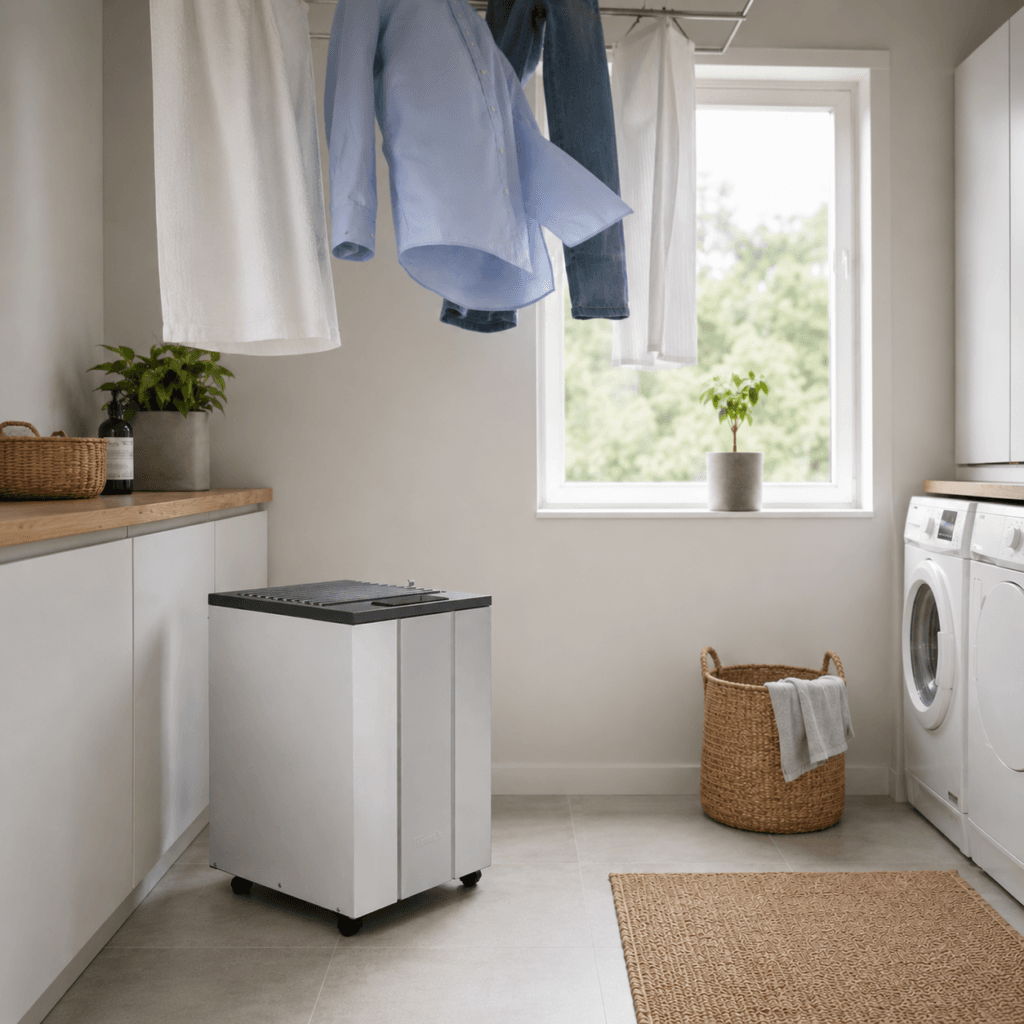
The most important thing is to remove the moisture from the room as quickly as possible. Good ventilation helps, but in many utility rooms, basements and flats, it is not always sufficient. By keeping the humidity at a low level, your laundry can dry much faster whilst reducing the risk of unpleasant odours.
A dehumidifier removes the moisture released by the laundry whilst circulating drier air throughout the room. This helps clothes dry faster and contributes to a better indoor climate. If you frequently dry your laundry indoors, it is therefore important to choose a dehumidifier designed specifically for this purpose and with a high airflow rate. See our full range of dehumidifiers for utility rooms
If you recognise several of the points below, it is likely that the problem is due to high humidity and slow drying.
If your laundry smells musty even though it’s freshly washed, it’s often not the washing machine that’s the problem. In many cases, it’s instead because the laundry is drying too slowly as the humidity is too high.
By removing the moisture more quickly, you can shorten the drying time, keep your laundry smelling fresh for longer and, at the same time, reduce the risk of condensation, mould and unpleasant odours in your home.
If you regularly dry your laundry indoors, a dehumidifier designed for laundry rooms is an effective way to create a drier and healthier indoor climate.
If laundry smells sour or musty after drying, it is often because it has dried too slowly in a room with high humidity. When clothes are damp for a long time, bacteria can start to grow in the fabric, creating the sour smell. Using a dehumidifier in the laundry room or the room where the laundry is hanging reduces the humidity and the clothes dry faster.
If the laundry smells clean when taken out of the machine but starts to smell later, the problem is usually because it’s drying too slowly.
Yes. When the air contains a lot of moisture, it becomes harder for clothes to dry, which increases the risk of bacterial growth and unpleasant odours.
No, but when large amounts of moisture are released into the home, it needs to be ventilated out. Otherwise, the humidity can rise and cause problems with condensation, mould and unpleasant odours.
Common signs include a musty smell, condensation on windows, mould, laundry taking a long time to dry, and the air feeling heavy or stuffy. With a hygrometer, you can easily measure the relative humidity and check whether it is at a healthy level.
The optimal indoor humidity level is usually between 45–55%. Within this range, your skin, mucous membranes, airways, plants and furniture will thrive, while the risk of mould is minimised.