Are you experiencing afternoon fatigue in the office? Many blame the energy dip on lunch or a lack of caffeine – but a common and often overlooked cause is poor air quality in the workplace. High levels of carbon dioxide (CO₂), dust and airborne particles affect the brain’s oxygen supply, which can lead to fatigue, poor concentration and reduced work performance.
Improving air quality in offices is therefore not only a comfort issue, it is also a productivity issue. For office air purifiers

Many offices struggle with poor indoor air quality, but few realize how it affects employee performance. Headaches, fatigue, difficulty concentrating and dry eyes are common symptoms that are often overlooked.
Research shows that poor ventilation and high concentrations of air pollutants can reduce work performance by up to 15%.
Cognitive impairment – High levels of CO₂ and particulate matter (PM2.5) can affect brain function, leading to poorer focus and longer reaction times.
Increased fatigue – When air quality is low, many people experience a more pronounced energy dip in the afternoon.
Increased transmission – In poorly ventilated environments, airborne particles and infectious agents spread more easily, which can contribute to more sick days.
Improving air quality in the workplace is therefore an important part of systematic health and safety management.
For businesses, this means that investing in better indoor air can have a direct impact on both performance and finances. Studies from Harvard, among others, have shown that cognitive performance improves significantly in environments with better ventilation and lower levels of particles and CO₂.

Ventilation – Ensure that the office has good air circulation and that the ventilation system is regularly maintained.
Air purifier – An effective air purifier removes pollen, dust and harmful particles.
Plants – Natural air purifiers that can absorb toxins and improve air quality.
Chemical-smart choices – Choose furniture and cleaning products with low chemical emissions.
For larger premises and open plan offices, a very high capacity air purifier is required. Wood’s Gran 900 is the most powerful air purifier on the market and is designed for professional environments where many people are present at the same time. It purifies up to 588 m³ of air per hour and has a filtration rate of up to 99.98% of airborne particles. This makes it particularly suitable for open-plan offices, conference rooms, coworking spaces and reception areas where air quality is quickly affected by high traffic.
For smaller spaces such as individual offices, breakout rooms or small meeting rooms, Wood’s AL 310 is an effective option. It combines high filtration capacity with a compact format and is adapted to create a cleaner working environment in smaller spaces where the need for quiet and continuous operation is important.
By choosing the right sized air purifier for each part of the office, businesses can improve air quality in an energy-efficient way while creating better conditions for health, focus and productivity.
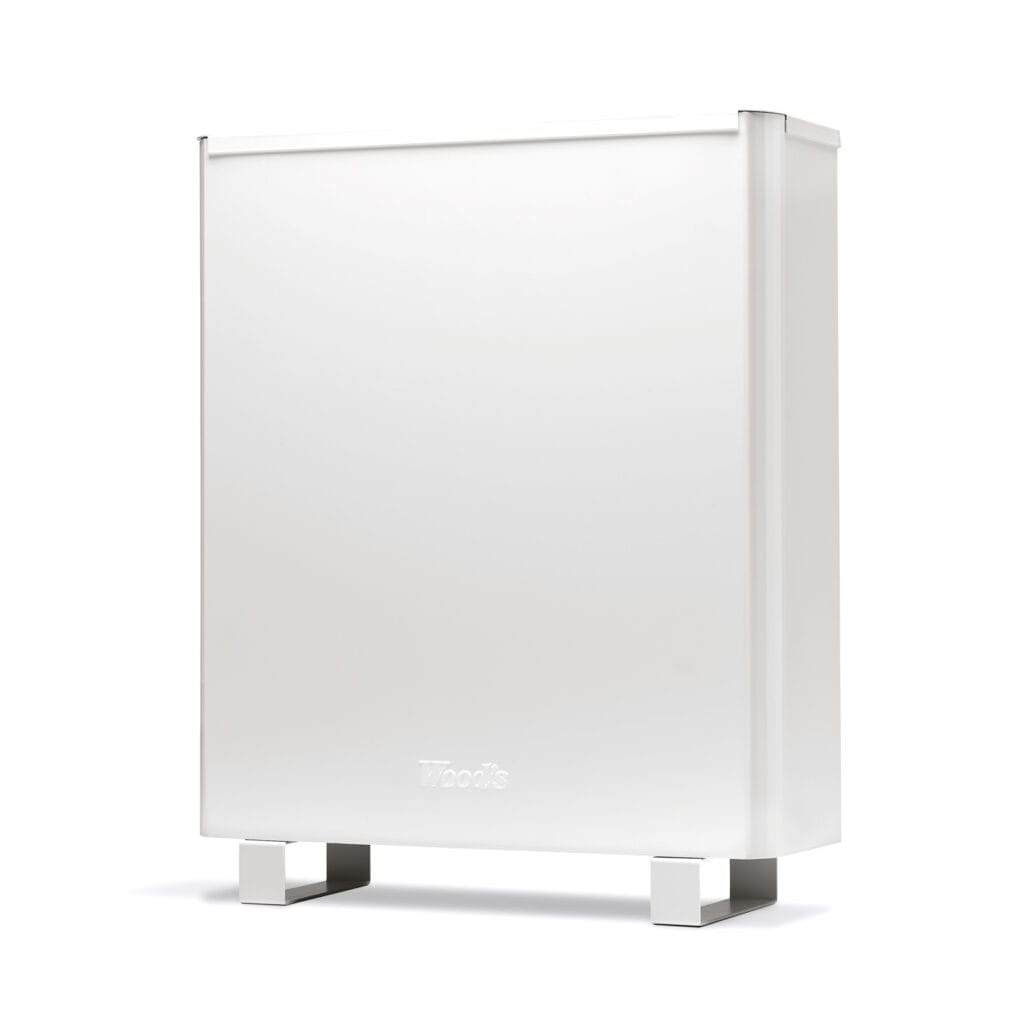
Air purifier for offices, bedrooms and living rooms
Air purifier for offices, bedrooms and living rooms
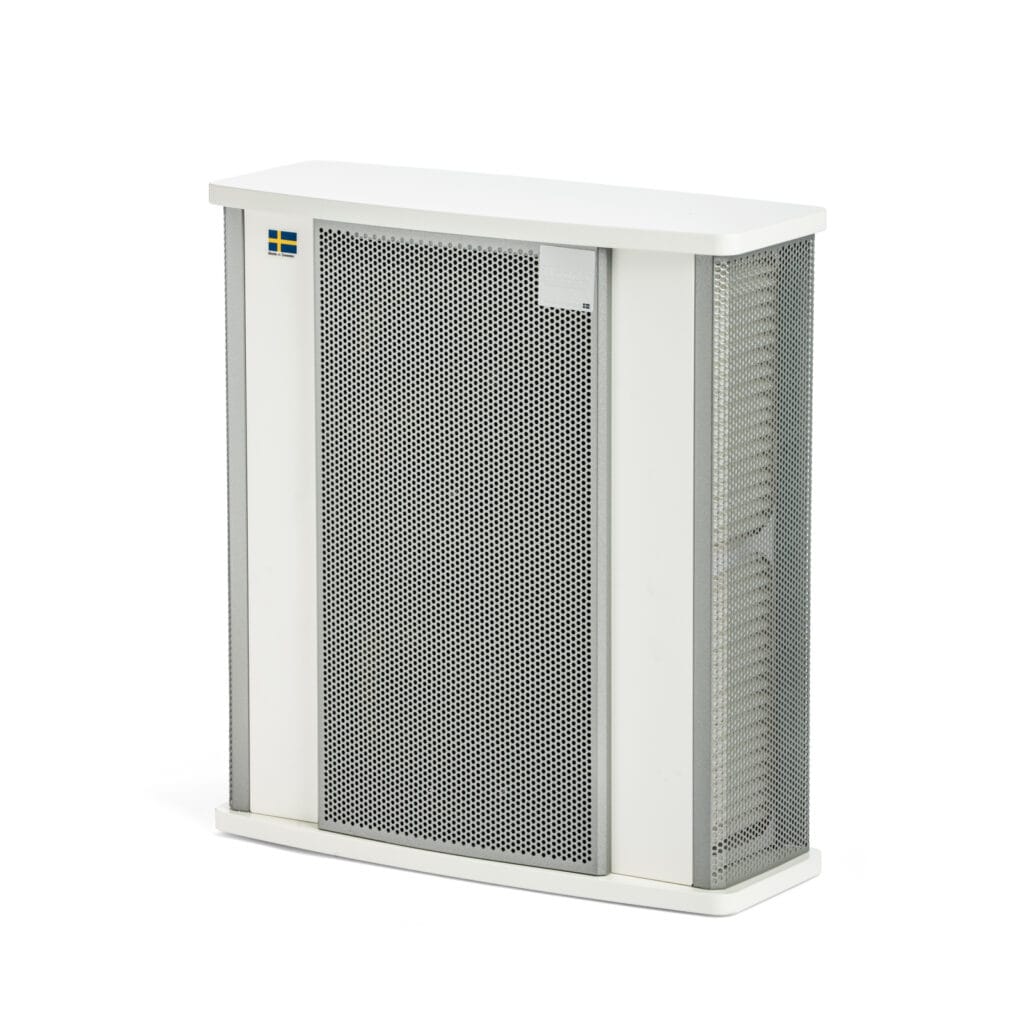
Air purifier for offices and larges rooms.
If ventilation is inadequate or there are many people in the same room, an air purifier can improve air quality by reducing particles such as dust, pollen and PM2.5. It acts as an effective complement to existing ventilation.
If ventilation is inadequate or there are many people in the same room, an air purifier can improve air quality by reducing particles such as dust, pollen and PM2.5. It acts as an effective complement to existing ventilation.
Air cleaners do not replace ventilation, but can complement it. Ventilation replaces air, while an air purifier filters out particles and improves the air quality in the room – especially in open plan offices where air circulation is limited.
High levels of carbon dioxide (CO₂) and airborne particles can impair concentration, reaction time and decision-making. Research shows that better air quality can help improve cognitive performance and reduce fatigue during the working day.
Cleaner air can reduce the amount of airborne particles and potential contaminants in office environments. This can contribute to fewer sick days and a more sustainable working environment over time.
The number depends on the area of the room, the ceiling height and the desired air change rate. In larger open spaces, several units are often required to ensure effective air cleaning throughout the room.
The CADR (Clean Air Delivery Rate) should be adapted to the volume of the room. For office environments, several air changes per hour are recommended to maintain good air quality and reduce particulate matter.
What it is. Poor ventilation and elevated CO₂ levels can contribute to headaches, fatigue and difficulty concentrating – common symptoms in office environments with poor air quality.