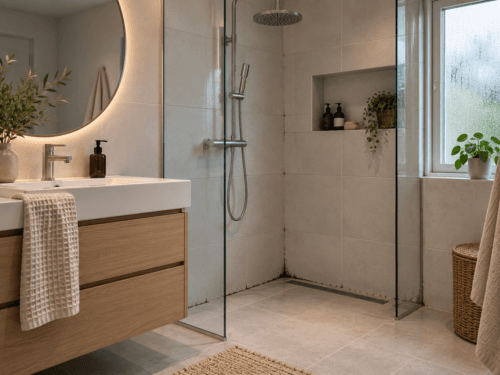
Black spots in tile grout, silicone or around the shower are often a sign that surfaces in the bathroom remain damp for too long. Mould thrives where there is both damp and organic material, and the risk increases when the bathroom doesn’t have time to dry properly between showers and baths. To tackle the problem, you therefore need to both remove existing growth and reduce the cause of the high damp levels.
Black mould in the bathroom mainly occurs when damp surfaces do not have time to dry quickly enough. Showers and baths introduce large amounts of water and water vapour into a relatively small space. If the ventilation, air circulation or drying process cannot cope with the load, moisture may remain on, for example, tile joints, silicone and other surfaces.
The Public Health Agency of Sweden explains that mould, which appears as black spots on tile grout and other bathroom surfaces, often thrives in this damp environment alongside biological material, such as skin flakes. Minor surface growth therefore does not necessarily indicate a structural fault. If, on the other hand, the growth is extensive, it may be a sign that the ventilation needs to be checked.
At the same time, the bathroom is one of the most humidity-prone rooms in the home. The humidity levels rise even further if several people shower one after the other or if the bathroom is used to dry laundry.
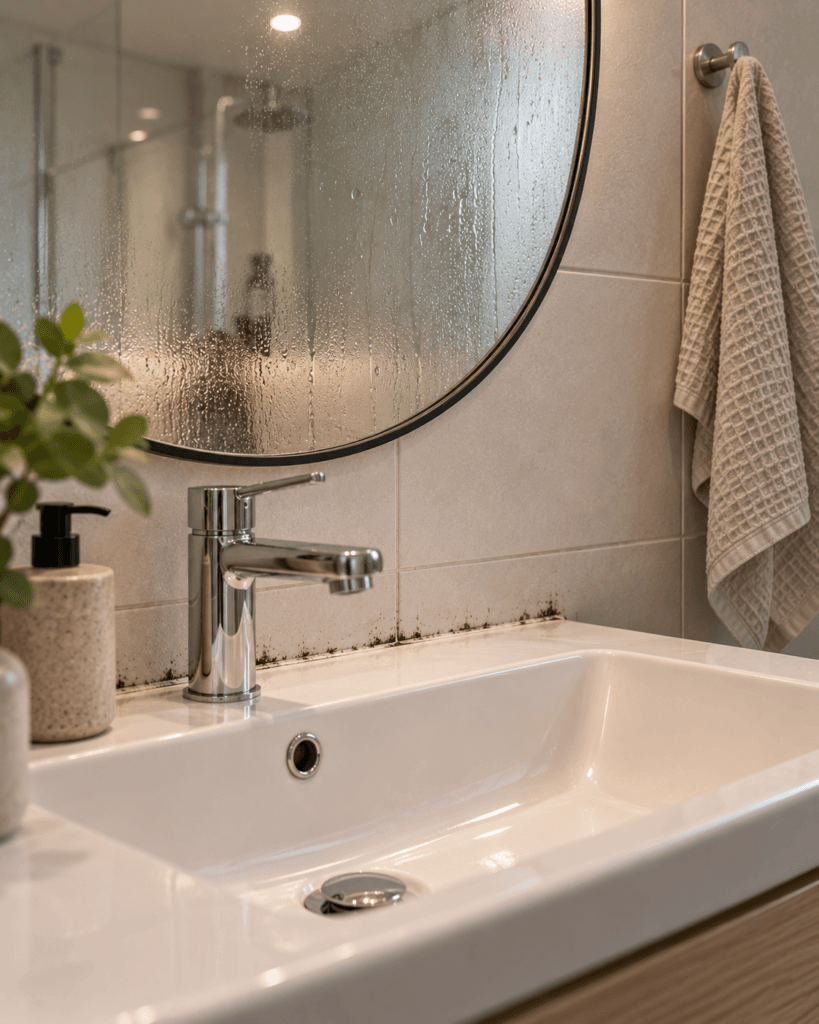
Mould needs access to moisture to grow. Micro-organisms are naturally present in our environment; dust and dirt can provide sufficient nutrients for mould to start growing if the humidity conditions are favourable.
If damp persists in the room for a prolonged period, it creates an environment that is conducive to mould growth. This is why drying the room properly after a shower and managing moisture levels are crucial.
The Public Health Agency of Sweden recommends, amongst other things, that you should look out for visible mould, unusual odours, discolouration and other signs of damp damage.
Pay particular attention if:
A few black spots in a grout line and suspected damp damage inside a wall are therefore not the same thing. If surface finishes are changing, there is a distinct musty smell, or the problem is extensive, the cause should be investigated rather than simply cleaning the visible surface.
Minor surface mould growth needs to be cleaned, but it is just as important to address the conditions that allowed the mould to grow in the first place; otherwise, there is a high risk that the black spots will return.
The cleaning method needs to be adapted to the material and the cleaning products the surface can tolerate. Therefore, always follow the instructions for surface finishes, grout and cleaning products.
If the mould returns after cleaning, the focus should shift from the stains themselves to why the bathroom isn’t drying out.
The most important thing is to minimise the time that the bathroom’s air and surfaces remain damp. Ventilation should remove damp and contaminated air from the home. The Swedish National Board of Housing, Building and Planning describes effective ventilation as important both for the indoor environment and for reducing the risk of damp-related problems.
Yes, a dehumidifier can be an effective addition when a bathroom regularly struggles to dry out after a shower, bath or laundry. The dehumidifier removes water from the air, which allows the humidity to drop more quickly and creates better conditions for wet surfaces and textiles to dry.
As the air becomes drier, more moisture can evaporate from towels, clothes, grouting and other wet surfaces. A dehumidifier therefore doesn’t help by ‘killing mould’, but by addressing one of the most important factors for mould growth: the availability of moisture.
In a small, heated bathroom, a smaller, portable dehumidifier is often sufficient. A compact model is also easier to move and store away when not in use. As the bathroom is a wet room, it is important that the dehumidifier is approved for the environment and location in which it will be used. The IP rating requirements depend on the distance from the shower and bath – the closer to water, the higher the requirements for protection against water. You should therefore always follow the product’s user manual and never place a portable dehumidifier where it risks being exposed to water or water splashes.


Dehumidifier for bathrooms

Dehumidifier for bathrooms
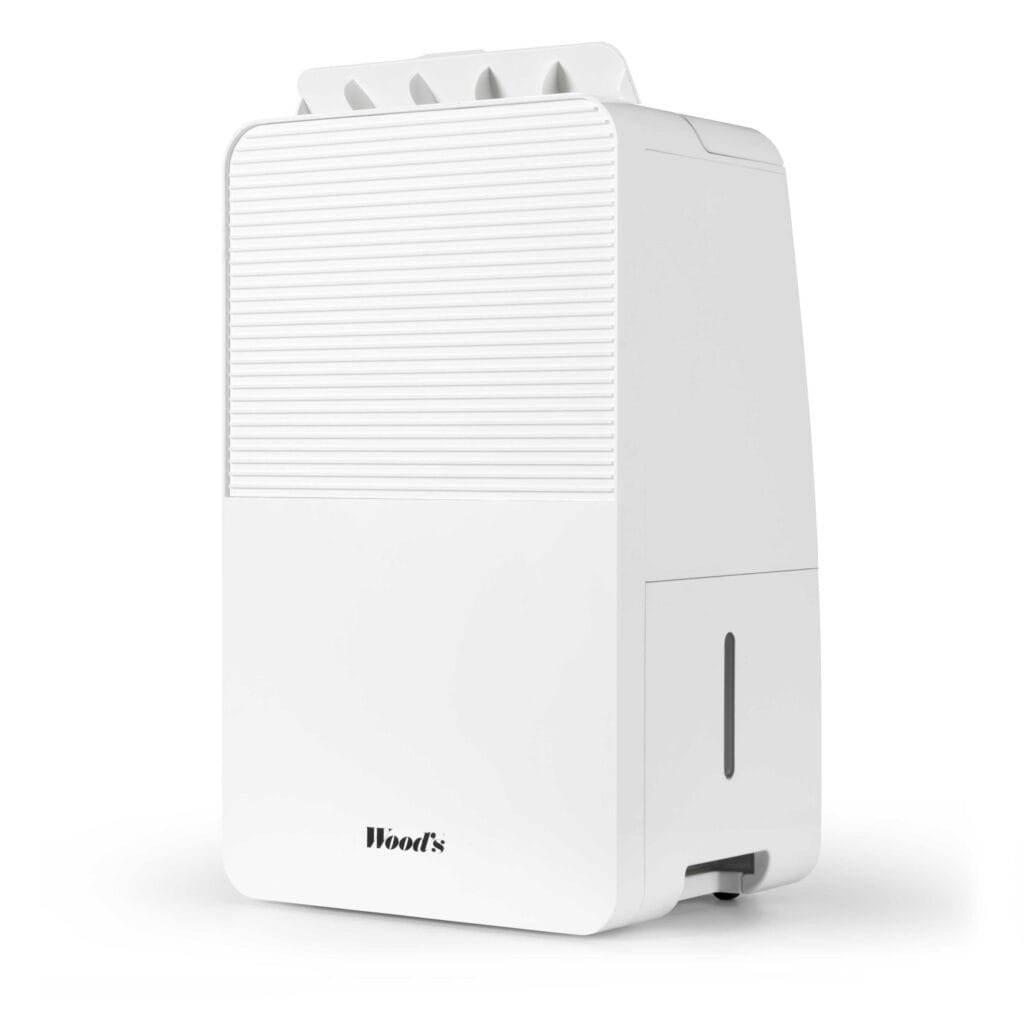
Dehumidifier for bathrooms
If you also intend to use the dehumidifier to dry laundry in the bathroom, it may be better to choose a more powerful model with a higher dehumidification capacity and good airflow. Top-mounted air outlet is an advantage as the drier air is blown upwards through the hanging laundry, whilst the dehumidifier removes the moisture that the laundry releases into the air. This helps the washing to dry faster and reduces the moisture load in the room.

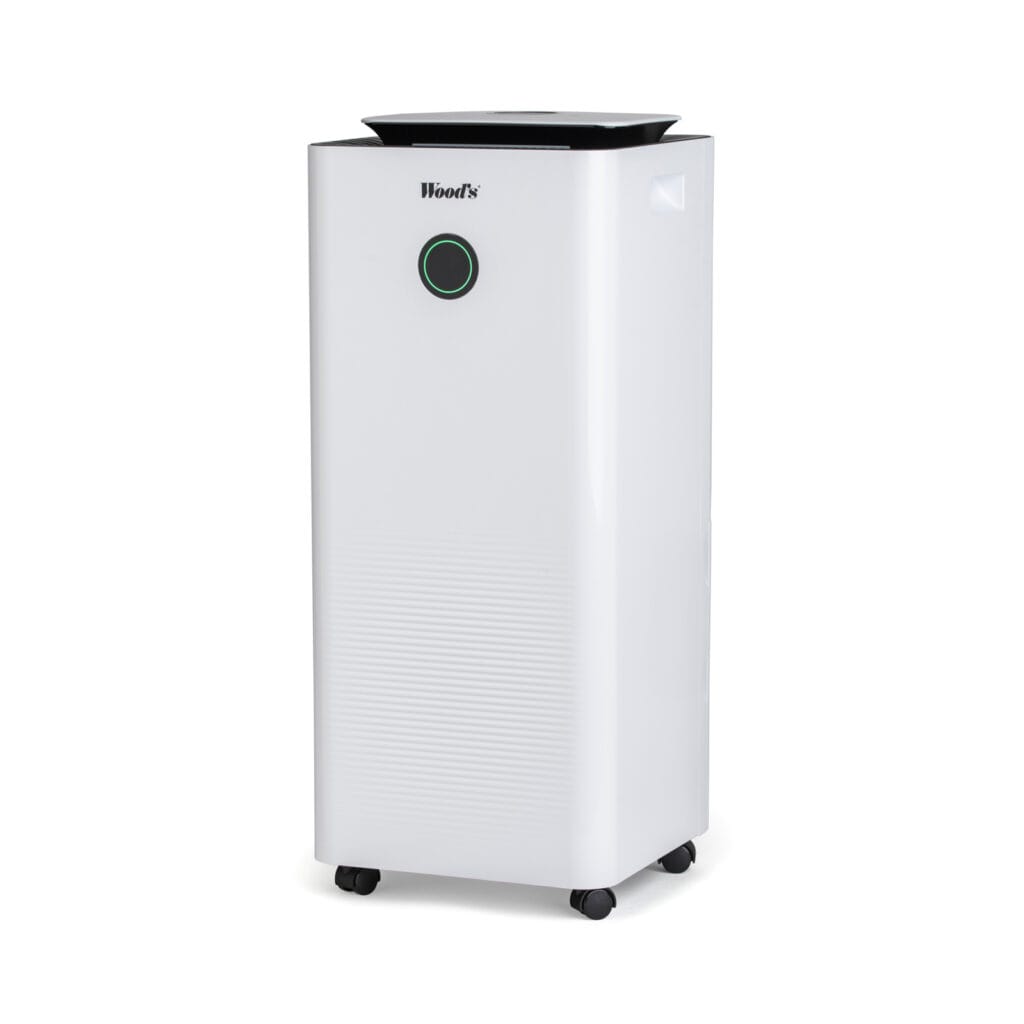
Dehumidifier for drying laundry

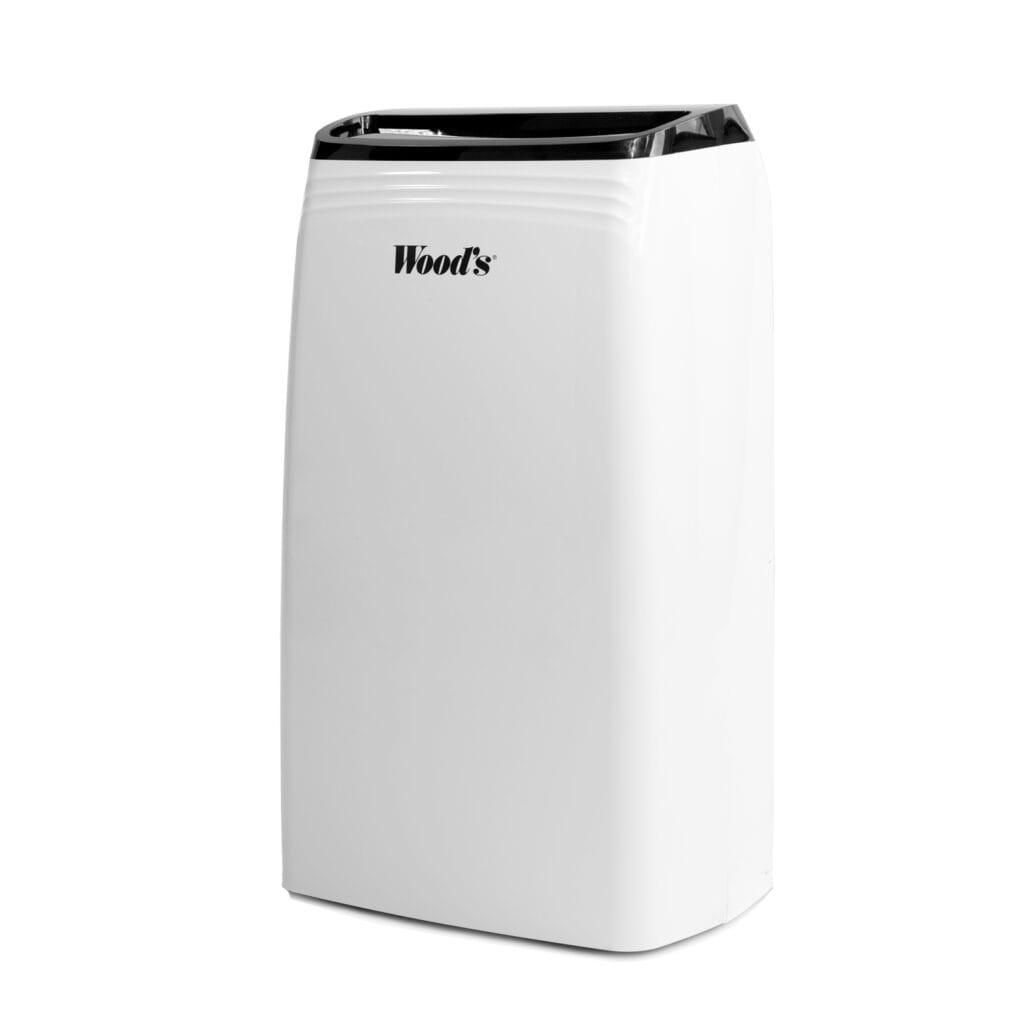
Dehumidifier for living area and apartment

Dehumidifier for drying laundry with a pump
A dehumidifier can reduce humidity, but it cannot repair a leak, a damaged waterproofing membrane or faulty ventilation. If the bathroom has extensive mould growth, obvious moisture damage, recurring unusual odours or if you suspect that moisture is present inside the walls or floors, the cause needs to be investigated. If you live in a rented property or a flat in a housing co-operative and suspect problems with the property itself, you should first contact your landlord or the housing co-operative.
A good rule of thumb is therefore: Clean the visible mould, find out why the damp is persisting, and address the cause. Dehumidification is an effective part of the solution when the problem is high damp levels and slow drying – but not when there is underlying structural damage.
Yes. It can quickly reduce the humidity after showering and help keep the room dry. This reduces the risk of mould growth on grouting, walls and ceilings and keeps your towels fresh for longer.
Black mould often returns if surfaces remain damp for long periods. Cleaning removes the visible growth, but if ventilation or drying is still inadequate, the same conditions for new mould growth remain.
No, black or dark discolouration is not necessarily mould. It could be mould growth, dirt or discolouration in the material itself. However, if the spots reappear in areas that are often damp, there is good reason to investigate both the surface and the damp conditions.
If the bathroom remains damp for long periods, has recurring mould growth or feels stuffy, the ventilation may need checking. The Public Health Agency of Sweden states that large amounts of surface mould in bathrooms can be an indication of inadequate ventilation.
A dehumidifier can be particularly useful when drying washing, as washing releases large amounts of moisture into the air. When the humidity in the air is reduced, more water can evaporate from the washing, causing it to dry faster. Always check that the dehumidifier is suitable for the location in question and follow the product’s safety instructions for use in wet rooms.