




If the humidity is often below 45%, especially in winter, and you experience dry skin, coughing, a stuffy nose, static electricity or dry plants, this is a clear sign that a humidifier can make a big difference.
Most humidifiers should be cleaned regularly according to the manufacturer’s recommendations. Filters should be replaced or cleaned as needed to ensure hygienic operation and optimal performance.
Place the humidifier in the room where you spend the most time or where the problems are greatest, such as the bedroom, children’s room or office. It should be free-standing, not directly against walls or furniture, so that the air can circulate properly.
The size of the humidifier should be adapted to the size of the room and the ceiling height. Smaller bedrooms require lower capacity, while larger living rooms, open-plan spaces or offices need more powerful models to maintain even humidity.
Yes. When the skin is moisturised from both the inside and outside, makeup often sits more evenly and lasts longer. Dry air can cause foundation to crack and highlight dry lines. A humidifier creates better conditions for even and long-lasting makeup.
Yes, children are often more sensitive to dry air because they have thinner skin and more sensitive mucous membranes. The right humidity can contribute to better sleep, calmer breathing and less irritation of the skin and airways in children.
Yes. Dry air causes moisture to evaporate more quickly from the skin. A humidifier helps the skin retain its natural moisture, which can reduce tightness, dryness lines and irritation, and help skin care products work better.
For many people with asthma and allergies, the right humidity can reduce irritation in the airways. When the mucous membranes are kept moist, they are better at filtering out dust and allergens. It is important to choose a hygienic humidifier that does not spread particles.
Yes, dry air can irritate the mucous membranes and contribute to coughs, stuffy noses and throat irritation. A humidifier can relieve these symptoms by moisturising the air, making breathing easier and more comfortable – especially at night.
If the humidifier is used in a bedroom, be careful to close the door to the bedroom so that the moisture does not escape into other rooms. If possible, start the humidifier well before you go to bed to quickly achieve the desired humidity.
No, this can damage the machine.
The optimal indoor humidity level is usually between 45–55%. Within this range, your skin, mucous membranes, airways, plants and furniture will thrive, while the risk of mould is minimised.
When the relative humidity is below 50% RH, it is recommended to use a humidifier. Normally the relative humidity is 15-30% during late autumn and winter, so it is mainly during autumn and winter that a humidifier should be used.
Yes, if the humidity in your home is often below 45%, a humidifier can make a big difference. Dry air is common during the winter months and can cause dry skin, irritated airways, coughing, poorer sleep and static electricity. A humidifier helps to restore a healthier indoor climate.
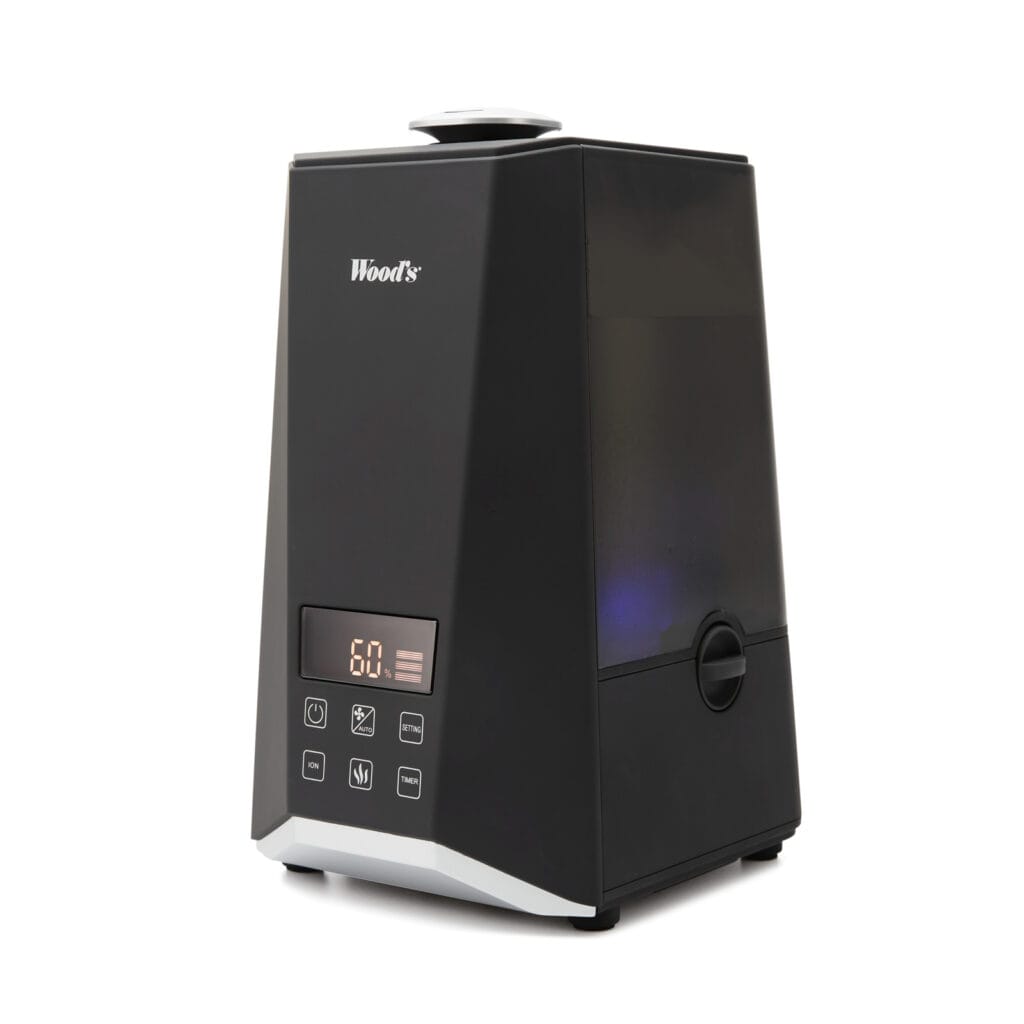
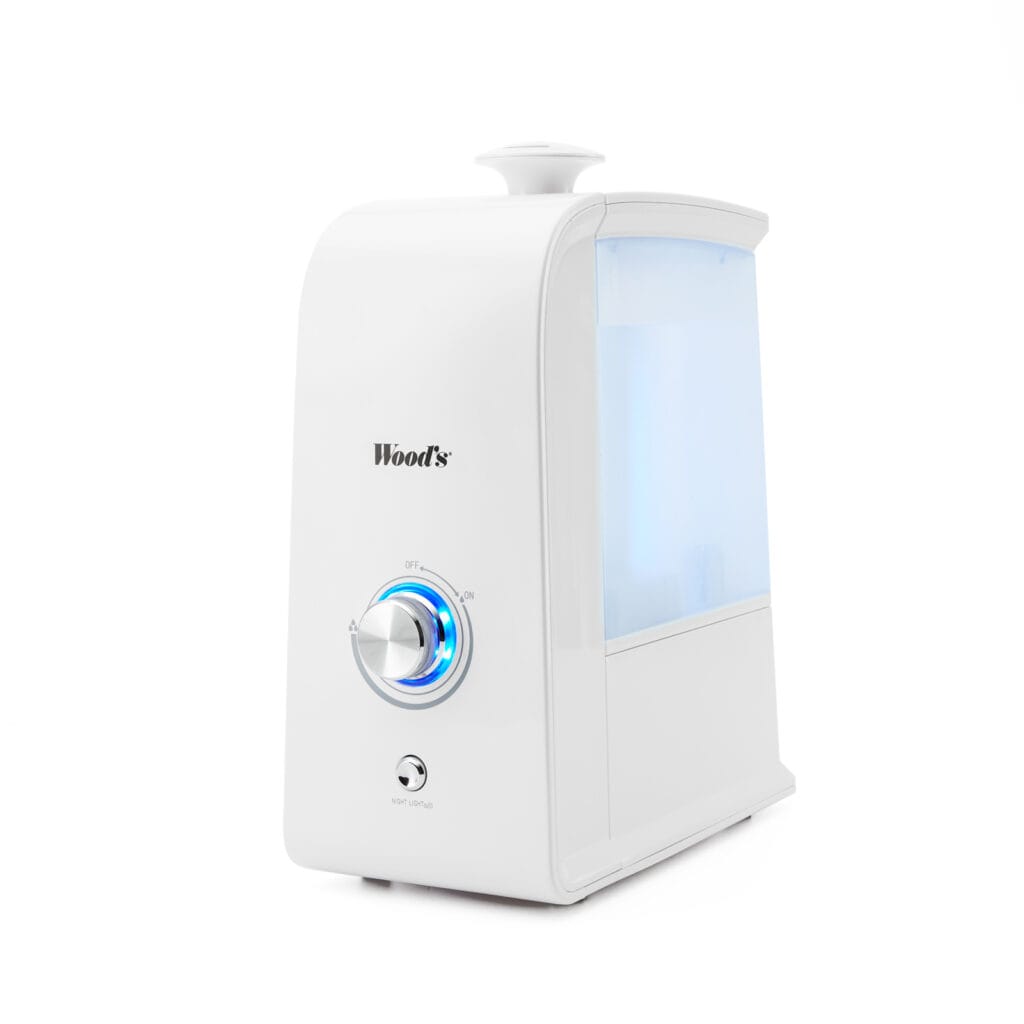
An ultrasonic humidifier has a diaphragm that breaks down the water molecules so that visible steam is blown out with the fan. Then the fog is usually at room temperature, as neither cold nor heat is added. A hybrid is usually a combination of hot and cold steam. It has a heating element in which heats the water so that the steam that comes out feels more tropical and warm.
The filter binds the lime in the water so that lime does not follow out and settles as white dust on surrounding surfaces.
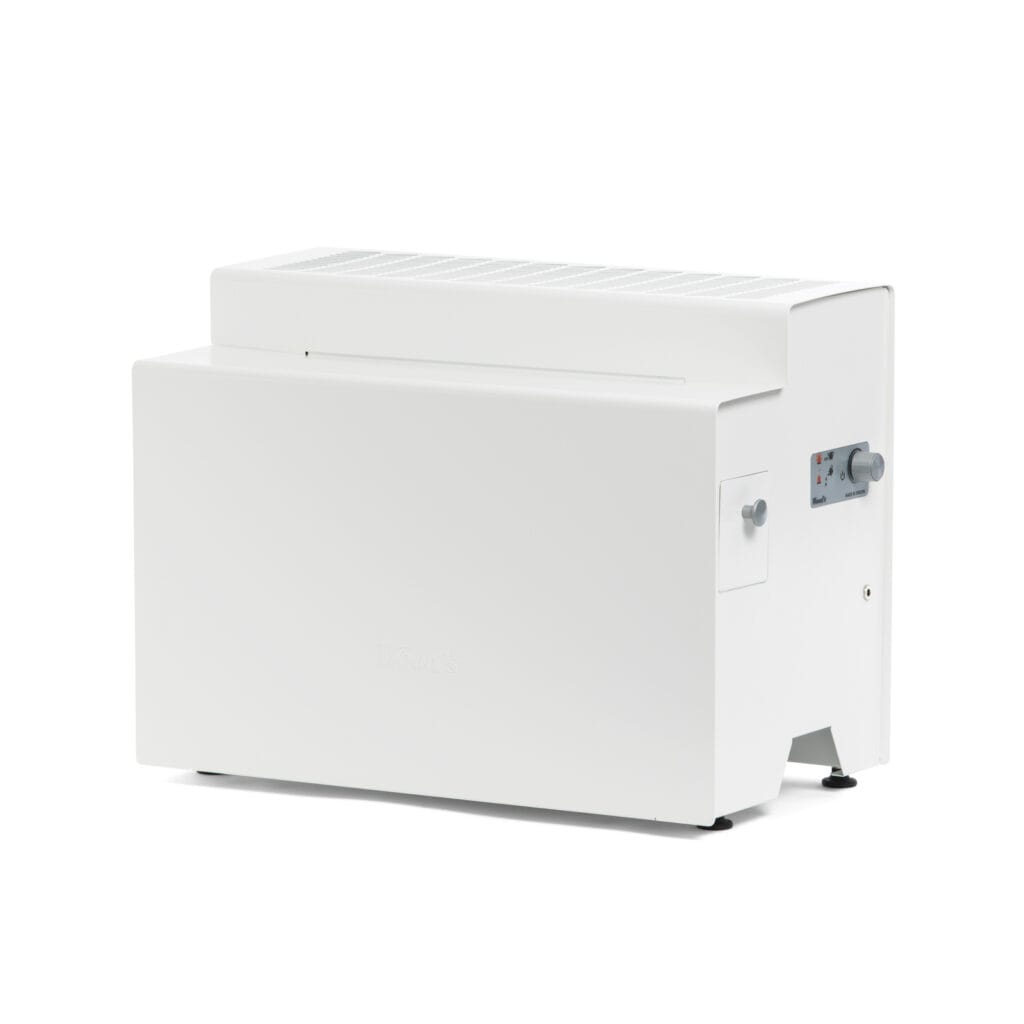
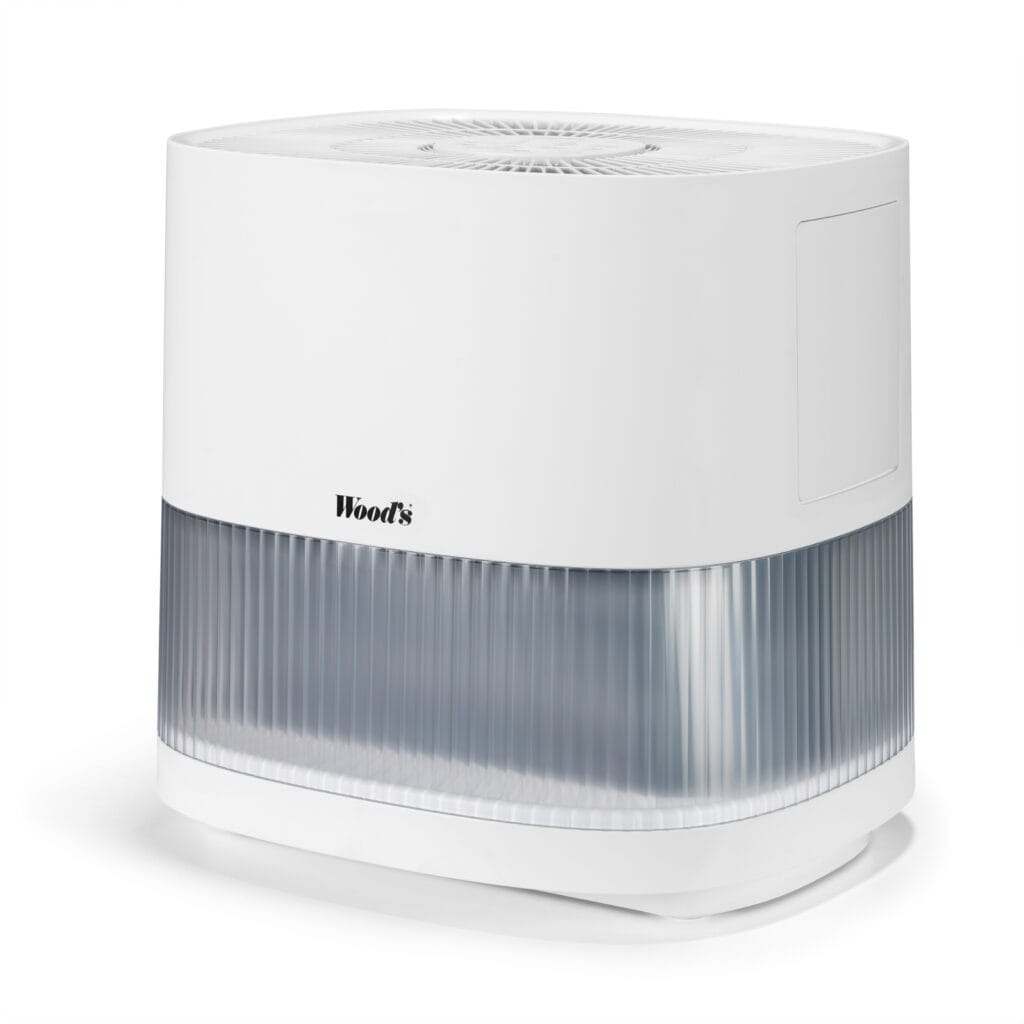
Wood’s Vienna HSW100 is a unit that produces invisible cold water vapour to increase the moisture level in the air (humidity). The device has a water level sensor to make sure you know when there is enough water for the device to work. The dry air passes through the wet filter and moisture spreads in the room. Minerals and other contaminants will get stuck in the filter. Clean and invisible steam is released throughout the room employing a powerful but silent fan. The cold fog spreads easily in the air. Wood’s humidifiers have incredibly low energy consumption in combination with a very low noise level. The Vienna HSW100 can be used all days of the year, all year round and will still not consume more than 20 kWh throughout the year. The filter is an antibacterial filter made of honeycomb paper that is both environmentally friendly and healthy.
A humidifier can be placed high on a shelf or chest of drawers, 1-2 meters up from the floor. When it is a little higher up, it is easier for the steam when it falls towards catching the moisture emitted by the humidifier. It is also easier to direct the flow converter when the machine is placed a little higher up from the floor.
Absolutely! The humidifiers from Wood’s are very quiet and energy efficient and with the moving nozzle, you can direct the steam where you want.
It is more common for a humidifier to be used for offices and public environments all year round. But dry air can also occur in private homes or apartments, so check the humidity with a hygrometer. If the humidity is low, then a humidifier can help create the right level of humidity in your indoor air.