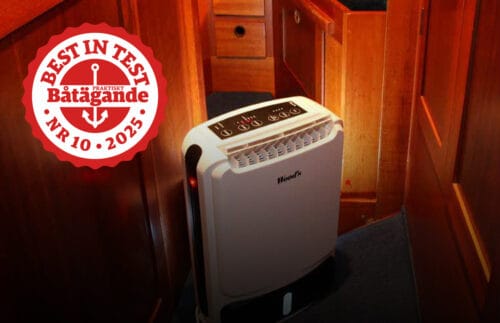
When a boat is put into winter storage, a problem often arises that many boat owners underestimate – damp. High humidity can quickly lead to condensation, mould, unpleasant odours and damage to both the interior and electronics.
In Praktiskt Båtägande’s major test of dehumidifiers for pleasure boats, Wood’s WDD80 was named Best in Test, whilst Wood’s SW22FW was awarded the Good Buy distinction. The test clearly shows the features required to keep your boat dry all year round.
According to Praktiskt Båtägande, the Wood’s WDD80 is the best dehumidifier for leisure boats thanks to its high capacity, ability to operate at low temperatures and user-friendly design.
For larger boats or boathouses where energy-efficient operation is particularly important, the Wood’s SW22FW is a strong alternative.
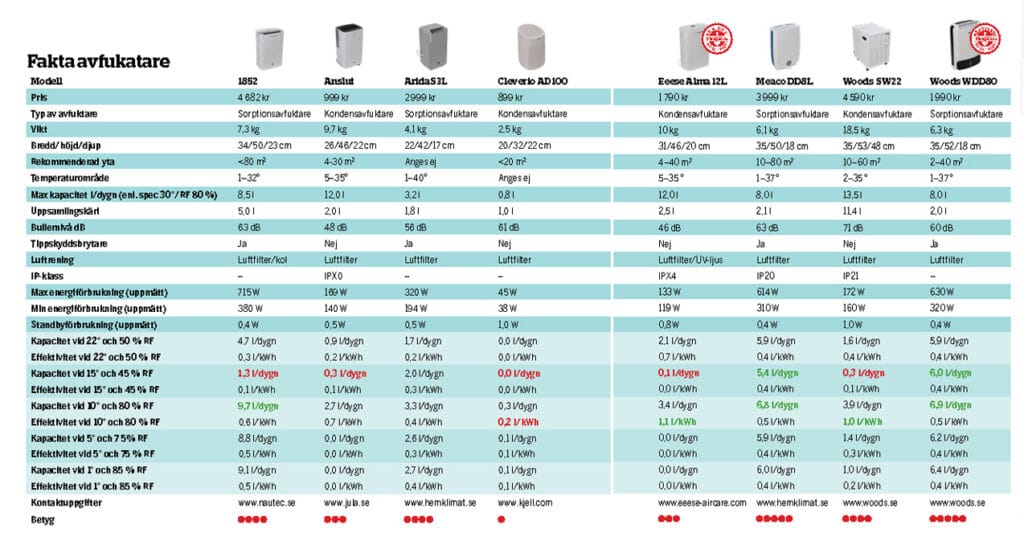
Read the full test here
During autumn and winter, humidity rises whilst temperatures fall. In a closed boat, this creates the perfect conditions for condensation and mould growth. Excessive humidity can cause:
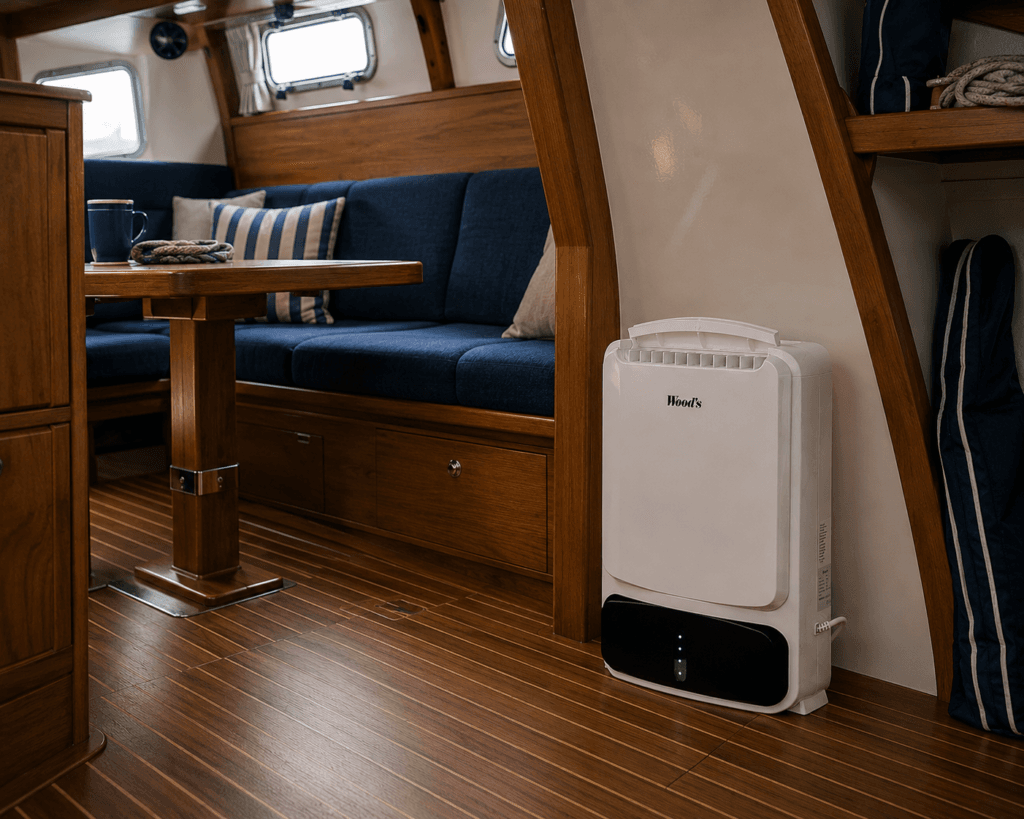
What makes the WDD80 particularly suitable for boats is its sorption technology. Unlike many traditional dehumidifiers, it continues to dehumidify effectively even when the temperature approaches zero degrees. The test highlighted, among other things:
For boat owners, this means a dehumidifier that works just as well during cold winter months as it does on damp autumn days.
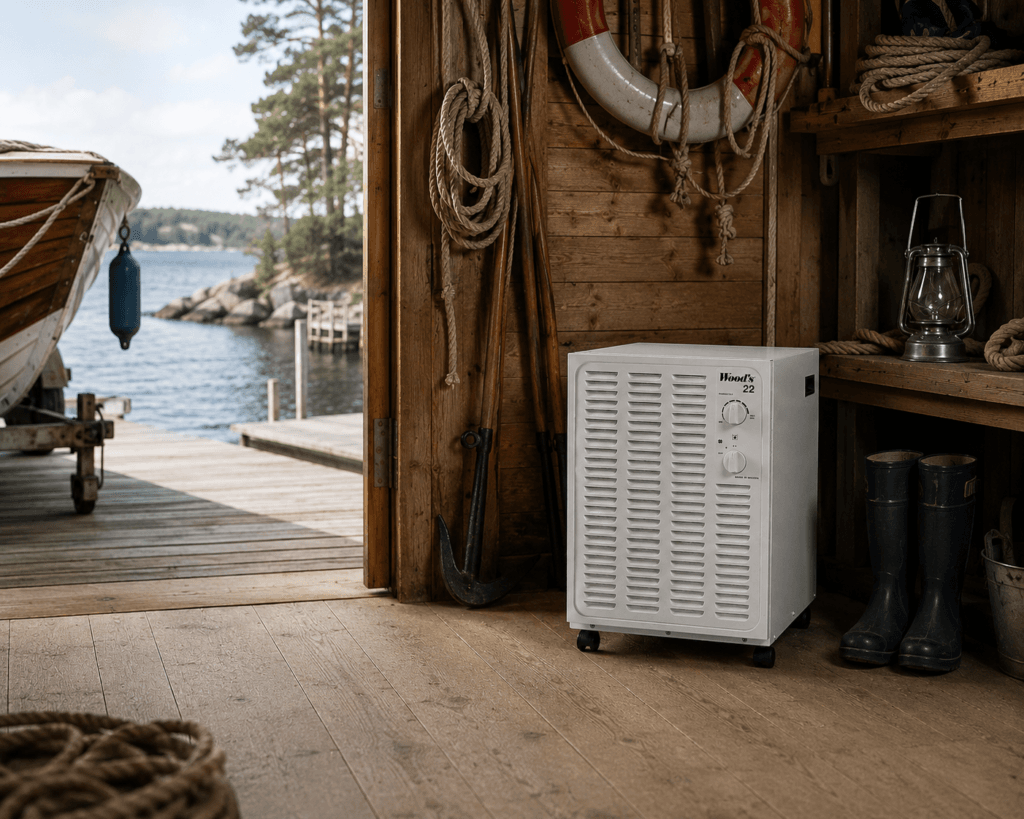
For boat owners looking for a powerful and energy-efficient condensation dehumidifier, the Wood’s SW22FW is an excellent option. In the test, the SW22FW was awarded the Best buy rating thanks to its combination of:
Despite its size, the SW22FW delivers very high performance with low energy consumption, making it an economical choice for extended periods of use. Ideal for larger boats and sailing yachts, boathouses and winter storage in larger spaces.
If you want to protect your boat from damp, mould and condensation, an effective dehumidifier is one of the best investments you can make. Practical Boating’s test shows that the Wood’s WDD80 is the best choice for boat owners seeking maximum performance in Nordic conditions, whilst the Wood’s SW22FW offers an energy-efficient solution for larger boats and spaces.
With the right dehumidifier, you can keep your boat dry, fresh and ready for the next season.
The most common cause is high humidity. When damp is trapped for long periods, mould, bacteria and microorganisms can start to grow in cushions, wooden fittings and other materials. To prevent odours, humidity must be kept at a low level throughout the winter storage period.
Mould thrives in damp and poorly ventilated environments. By keeping humidity below around 50%, the risk of mould growth is significantly reduced. Many boat owners therefore use a dehumidifier during winter storage to create a drier environment on board.
Condensation occurs when warm, humid air comes into contact with cold surfaces. During autumn and winter, temperature differences are common, which means that water can collect on windows, the hull and other cold surfaces in the boat.
Mould can cause unpleasant odours, discolouration and damage to the interior. For sensitive individuals, mould spores can also affect air quality and cause respiratory irritation.
For winter storage, a relative humidity of around 50% is usually recommended. This reduces the risk of mould, condensation and moisture damage, whilst better protecting the interior and equipment.
The most important thing is to reduce the amount of moisture in the air and ensure good air circulation. Many boat owners use a dehumidifier to keep humidity at a stable level throughout the winter months.
Yes. High humidity can contribute to corrosion on electrical components, connectors and other sensitive equipment. A drier climate reduces the risk of long-term damage.
The most common cause is the boat being left closed up for long periods whilst humidity levels rise. Without action, the moisture can lead to mould, unpleasant odours and damage to both the interior and equipment.