When winter arrives and the heating is turned on, the indoor climate in our workplaces changes more than many people realise. The air in the office becomes drier, sometimes extremely dry, which can lead to everything from irritated airways to poorer concentration and reduced well-being. Many people experience dry eyes, tight skin, persistent coughs and general fatigue during the working day – without directly linking these problems to humidity.
Dry air in the office is one of the most common but most overlooked workplace problems. It affects our health, performance and well-being at work. Fortunately, there is an effective and gentle solution: stabilising the humidity with the right humidifier adapted for the office environment.

In many office environments, humidity drops to 20–30% during the winter months, well below the recommended level of 45–55%. The reason is simple: cold outdoor air contains little moisture, and when it is heated by ventilation and radiators, the relative humidity drops sharply.
When the air becomes too dry, it directly affects the body. The mucous membranes in the nose, throat and eyes dry out, the skin loses its natural moisture and the airways become more sensitive to dust and particles. Common symptoms of dry air in the workplace are:
For people with asthma or allergies, the problems often become even more pronounced, as dry air exacerbates irritation in the airways.
It is not only staff who are affected by low humidity in the office. Dry air causes dust and particles to swirl more easily and remain in the air longer, further deteriorating the indoor climate. Static electricity increases, which can affect electronic equipment and create discomfort in everyday life.
Materials and furnishings also suffer. Wooden furniture, floors, documents and archive materials can be negatively affected when humidity is too low for long periods of time. A stable indoor climate is therefore an important part of a sustainable office.
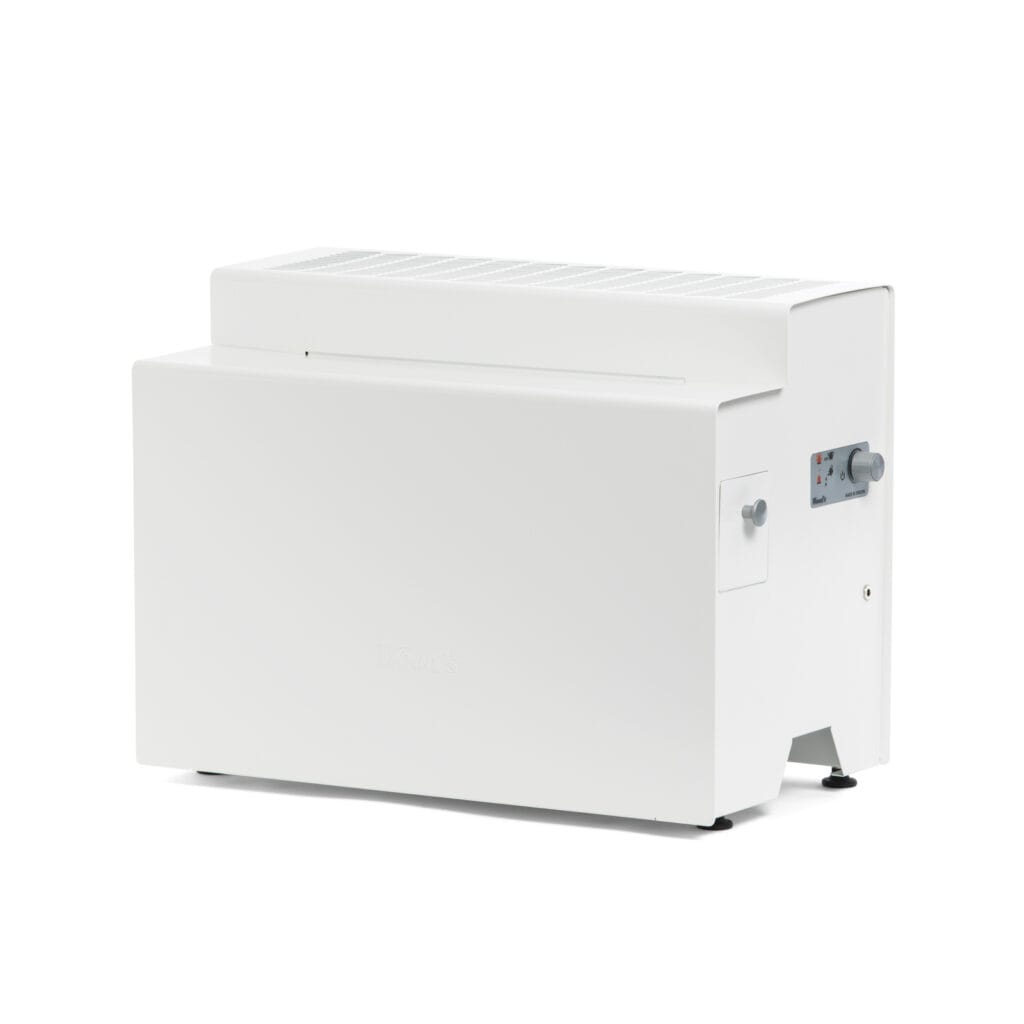
Wood’s Vienna HSW100 is designed for larger areas such as open-plan offices, conference rooms and open-plan layouts. It can humidify areas up to 210 m² and supply up to 1 litre of water per hour, while keeping energy consumption very low.
The evaporative technology means that moisture is added naturally, without mist or the risk of over-humidification. This makes the model particularly suitable for environments with a lot of electronics and many people.
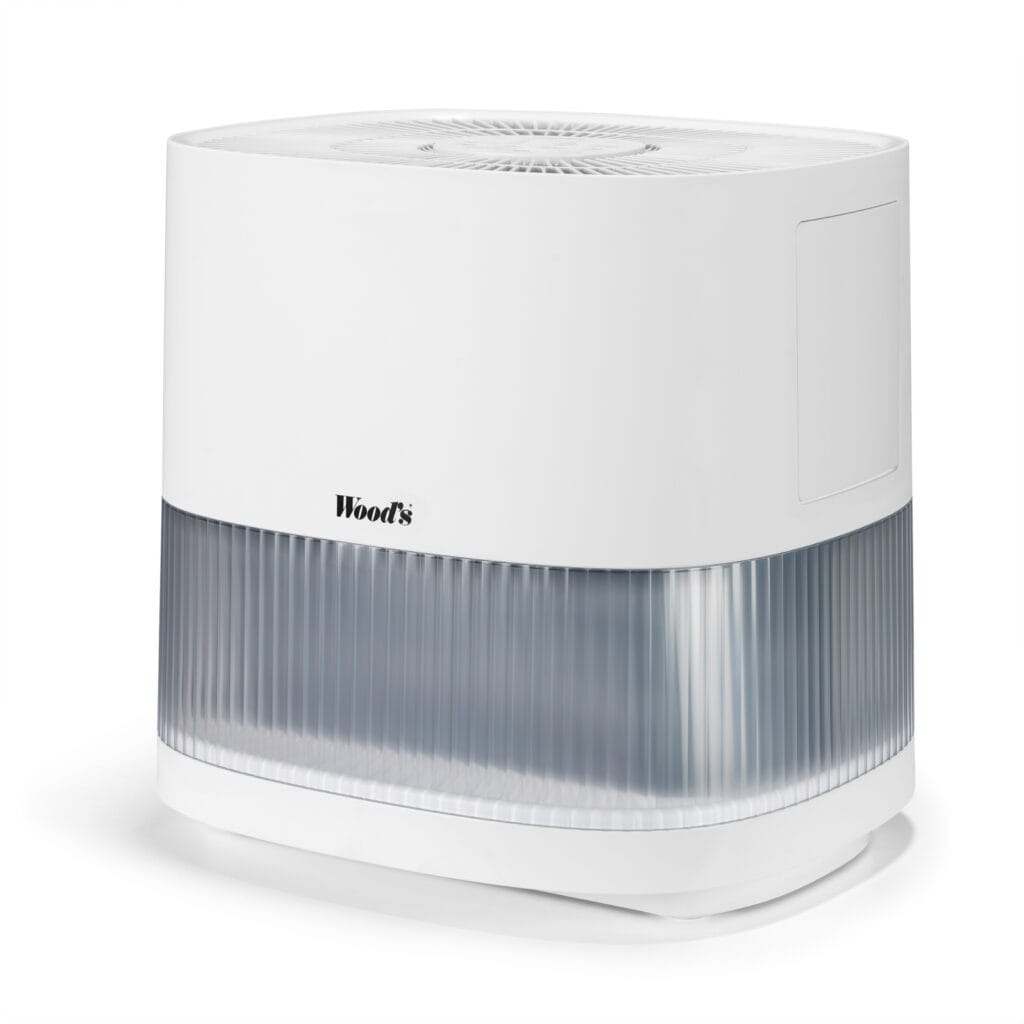
In smaller offices, meeting rooms and cubicle offices, Wood’s Geneva HSW90 is a quiet and effective option. With a noise level of only 23 dB, it does not disturb conversations or concentration. The double antibacterial filters ensure hygienic humidification, which is especially important in work environments.
The Geneva HSW90 stabilises the humidity throughout the working day and makes a big difference in rooms where many people talk, sit close together or stay for long periods of time.
When the humidity in the office stabilises at around 45–50%, something noticeable happens. The air feels softer to breathe, your eyes become less irritated and your concentration improves. The body’s mucous membranes function better as a protective barrier, reducing both irritation and susceptibility to infections.
Studies show that the right humidity in the workplace can contribute to:
A comfortable indoor climate is simply an investment in both staff health and company efficiency.
The improvement is often noticeable quickly. On the very same day, many people experience that the air feels more comfortable, that coughing and irritation are reduced and that their eyes do not feel as tired in the afternoon. In the long term, the effect is also noticeable in the team’s energy, collaborative atmosphere and well-being.
The right humidity in the office is not a luxury – it is a central part of a good working environment.
Humidifier for bedrooms, living rooms, children's rooms and offices
Humidifier for large premises and open-plan spaces
The air in offices often becomes dry during the winter months because cold outdoor air contains little moisture. When it is brought indoors and heated by ventilation, radiators and other heat sources, the relative humidity drops sharply. In many office environments, humidity can drop to 20–30%, which is well below the level that is comfortable for humans.
The recommended humidity in offices is between 40–60%, with an ideal level of around 45–50%. Within this range, people, the indoor environment and technical equipment all thrive. Lower levels can lead to dry mucous membranes, irritation and reduced comfort.
Dry air in offices can cause a variety of symptoms, including dry and irritated eyes, dry skin, a scratchy throat, coughing, headaches and a feeling of tiredness or reduced concentration. Many people also find that they catch colds more often or that their allergy symptoms worsen during periods of low humidity.
Yes, dry air can affect both focus and performance. When mucous membranes and eyes are irritated, the body has to work harder, which can lead to fatigue, poor concentration and more micro-breaks. Studies show that a good indoor climate contributes to increased well-being, fewer sick days and better work performance.
The easiest way is to measure the humidity with a hygrometer. It shows exactly how high or low the humidity is in the room. If the value is regularly below 40% during working hours, it is a clear sign that the office air is too dry.
Yes, a humidifier is one of the most effective ways to increase and stabilise the humidity in an office. By adding moisture to the air, a more comfortable indoor climate is created that is gentler on the airways, skin and eyes.
In office environments, evaporative humidifiers are often recommended, as they humidify the air in a natural and hygienic way without spreading microparticles. They adjust the humidity level to the needs of the room and are particularly suitable for open-plan offices and larger areas.
Yes, low humidity can exacerbate both allergy and asthma symptoms. When the mucous membranes dry out, they become more sensitive to dust, pollen and other particles that can more easily reach the airways. Dry air also causes dust to swirl up more often and remain in the air longer.
Dry air affects not only people but also furnishings and materials. Wooden furniture, floors and instruments can crack or warp, and electronic equipment can become more sensitive to static electricity. Stable humidity helps to protect both the working environment and equipment.
Many people experience improvements within one to two days after humidity has been increased. The air feels softer to breathe, eyes and skin become less irritated, and the working environment is perceived as more comfortable. In the longer term, sick leave and recurring problems can also be reduced.