
When the winter cold arrives and we start heating our homes, the indoor air changes more than most people realise. Humidity drops rapidly – often to levels where the mucous membranes no longer have time to rehydrate between breaths. For people with asthma and allergies, dry air can be a clear trigger: coughing, wheezing, heavy breathing and irritation in the nose and throat are common symptoms, especially at night when the body should be recovering.
It is easy to think that you are coming down with something, but in many cases the problem is much simpler – an overly dry indoor climate.

When the humidity drops below about 40 per cent, the protective moisture barrier in the airways thins out. The mucous membranes become dry, more irritated and less effective at filtering out particles. This makes it easier for dust, allergens, pet dander and other irritants to reach deeper into the airways and trigger stronger reactions.
At the same time, dust and particles swirl more easily in dry air and remain in the air longer before falling to the ground. The combination of dry mucous membranes and more particles in the air further exacerbates the problems.
Many people with asthma describe a feeling of heaviness in the chest, increased wheezing or difficulty taking deep breaths – especially in the evening. For some, this leads to night-time coughing, a blocked nose and repeated awakenings, even though they do not have a cold. The body then goes into a constant state of defence, which impairs recovery and leads to increased fatigue in everyday life.
For people with allergies, such as pollen allergy, dust mite allergy or furry animal allergy, dry air can be a decisive factor in how severe the symptoms become. When the mucous membranes dry out, they become more susceptible to particles that would otherwise have stuck earlier and passed unnoticed.
This is why many people experience their allergies ‘flaring up’ during the winter, even though the amount of allergens in the home has not increased. Many also describe an increased need for inhalers, more frequent coughing attacks and poorer sleep quality during the winter months.
When the humidity stabilises at around 45–50 per cent, the mucous membranes are able to rebuild the thin film of moisture that protects the airways. The result is often calmer breathing, less coughing and reduced irritation in the nose and throat.
Many people notice an improvement within 24 hours – the air feels less stuffy, the chest feels less strained and sleep is deeper. A more even humidity level also means that dust does not swirl up as easily, which can reduce everyday irritations such as dry eyes, fatigue and recurrent coughing in allergy sufferers.
For sensitive airways, it is important to choose a humidifier that works hygienically, evenly and without spreading particles. That is why evaporative humidifiers are often the best choice for people with asthma and allergies. They humidify the air naturally and reduce the risk of microscopic water droplets spreading in the air.
The Wood’s Vienna HSW100 is a good option for larger areas or open-plan spaces. It adds up to one litre of water per hour, operates energy-efficiently and keeps the humidity stable throughout the home – something that is particularly important for those with recurring asthma symptoms.
For bedrooms or smaller rooms, the Wood’s Geneva HSW90 is a safe and very quiet option. Thanks to its antibacterial filters and even humidification, it is particularly suitable at night, when the airways are most sensitive.
A simple first step is to find out what the air is actually like at home. With a hygrometer, you can quickly see if the humidity is at a level that could irritate the airways. Wood’s WHG-1 shows both temperature and humidity and provides a clear picture of the indoor climate. Many people are surprised at how low the values actually are during the winter months.
Dry indoor air is one of the most common reasons why asthma and allergies get worse in winter. When the mucous membranes dry out, the airways become more susceptible to dust and allergens, which can lead to coughing, wheezing, a blocked nose and disturbed sleep.
By stabilising the humidity at around 45–50 per cent, you can relieve the airways, improve sleep quality and create a calmer and more comfortable home environment – especially during the driest period of the year.
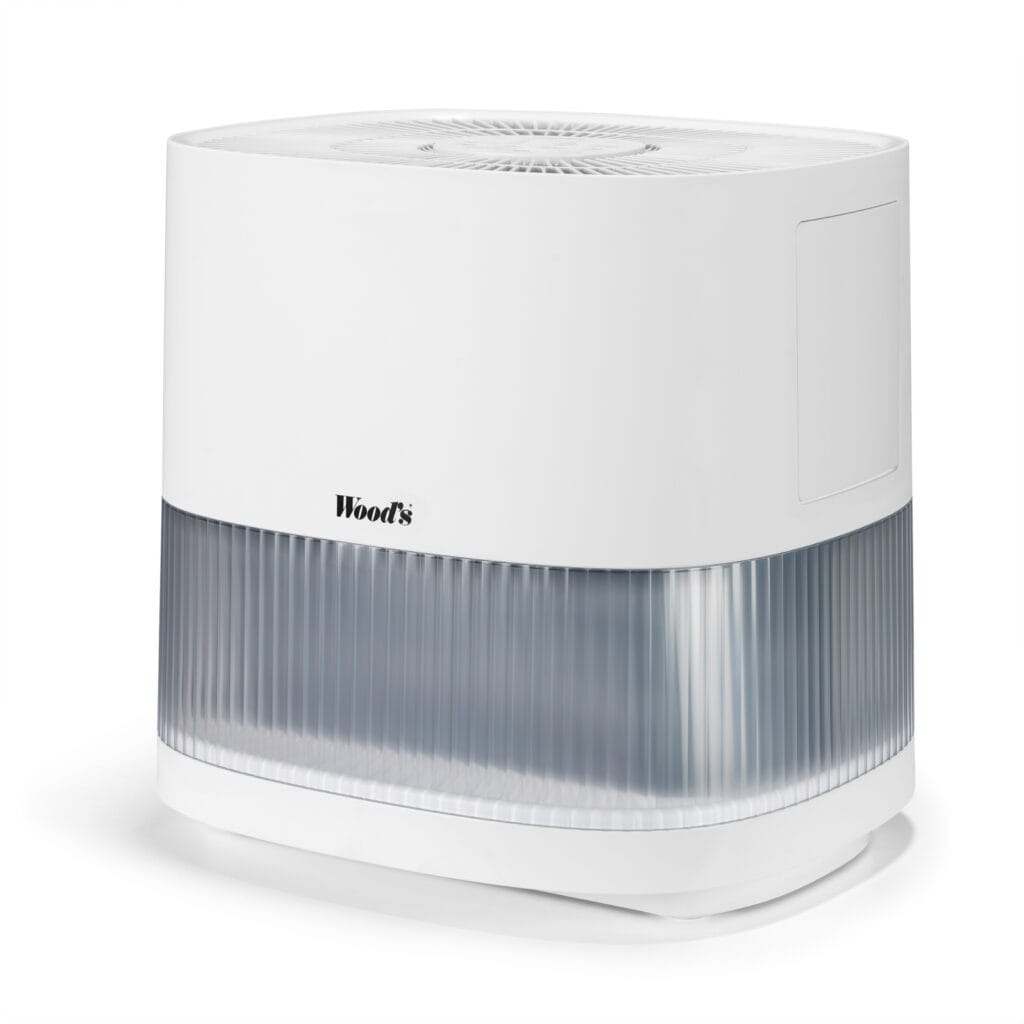
Humidifier for bedrooms, living rooms, children's rooms and offices
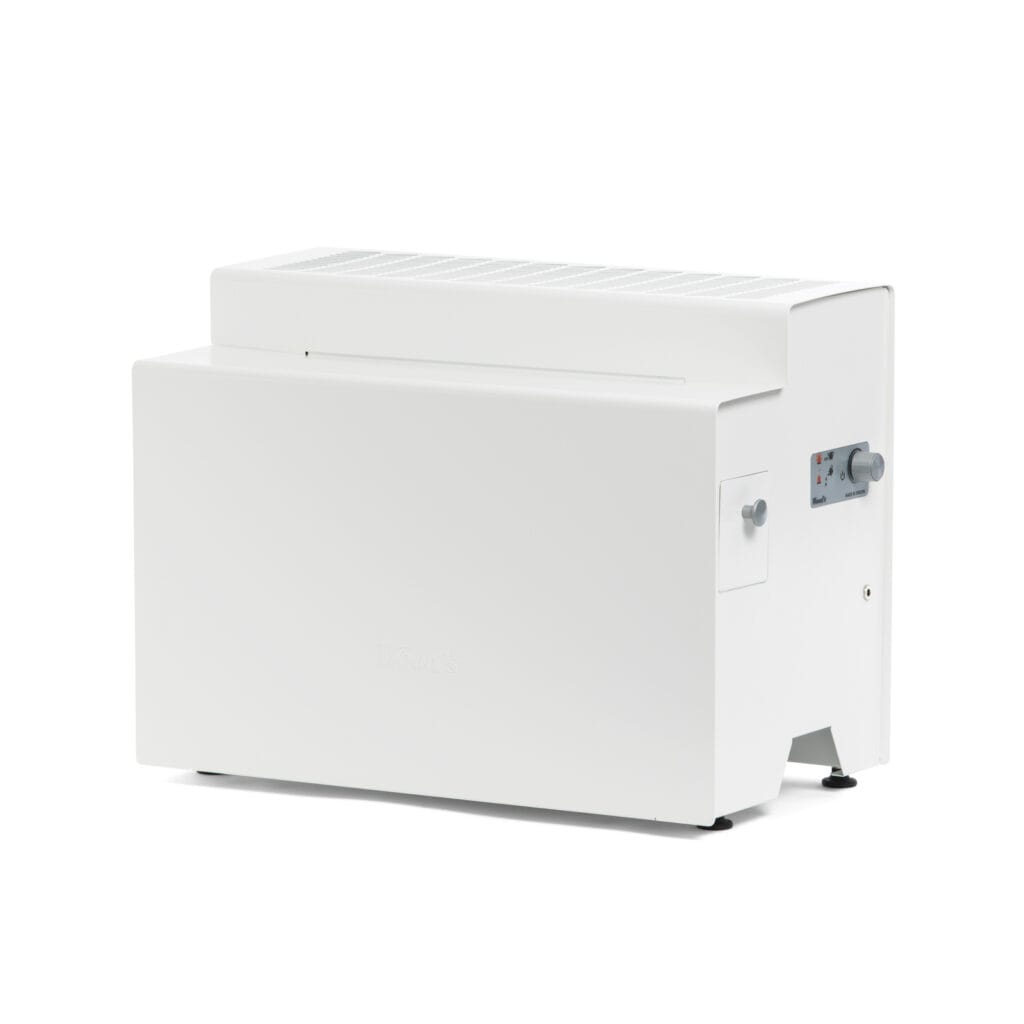
Humidifier for large premises and open-plan spaces

Hygrometer for measuring humidity and temperature
Dry air can irritate the airways and dry out the mucous membranes, making them more sensitive to particles and allergens. For people with asthma, this can lead to more coughing, wheezing, heavier breathing and increased use of inhalers – especially during the winter months.
During winter, indoor humidity drops significantly when we heat our homes. The dry air means that the mucous membranes do not have time to rehydrate between breaths, which can exacerbate asthma symptoms and disrupt sleep, even if you do not have a cold.
Yes. Dry air makes dust, mite particles, pollen residues and pet allergens easier to stir up and stay in the air longer. At the same time, the mucous membranes become drier and less effective at filtering out these particles, which can intensify allergic reactions.
For people with asthma and allergies, an indoor humidity level of around 45–50 per cent is recommended. At this level, the mucous membranes are kept moist without creating an environment where mould or dust mites thrive.
Common signs of excessively dry air include a dry cough, stuffy nose, throat irritation, wheezing, or symptoms that worsen at night. The most reliable way to know is to measure the humidity with a hygrometer, which shows exactly how dry the air is in your home.
Yes, a humidifier can help by stabilising the humidity and reducing irritation in the airways. When the air is not too dry, the mucous membranes are better protected, which can reduce coughing, wheezing and night-time discomfort.
Evaporative humidifiers are often the best choice for sensitive airways. They add moisture in a natural and hygienic way without spreading microscopic water droplets in the air, making them gentle on asthma and allergies.
At night, we lie still and breathe the same air for several hours. If the air is dry, the mucous membranes do not have time to rehydrate, which can lead to coughing, wheezing and waking up. Dry air in the bedroom is therefore a common cause of night-time discomfort.
Yes. When the humidity is at a more optimal level, the air is less irritating to the airways. This can reduce dry coughing, especially in people with asthma, allergies or sensitive mucous membranes.
Dry air does not cause asthma, but it can act as a strong trigger that exacerbates existing asthma symptoms. For people with already sensitive airways, dry indoor air can make a big difference to how severe the discomfort becomes.